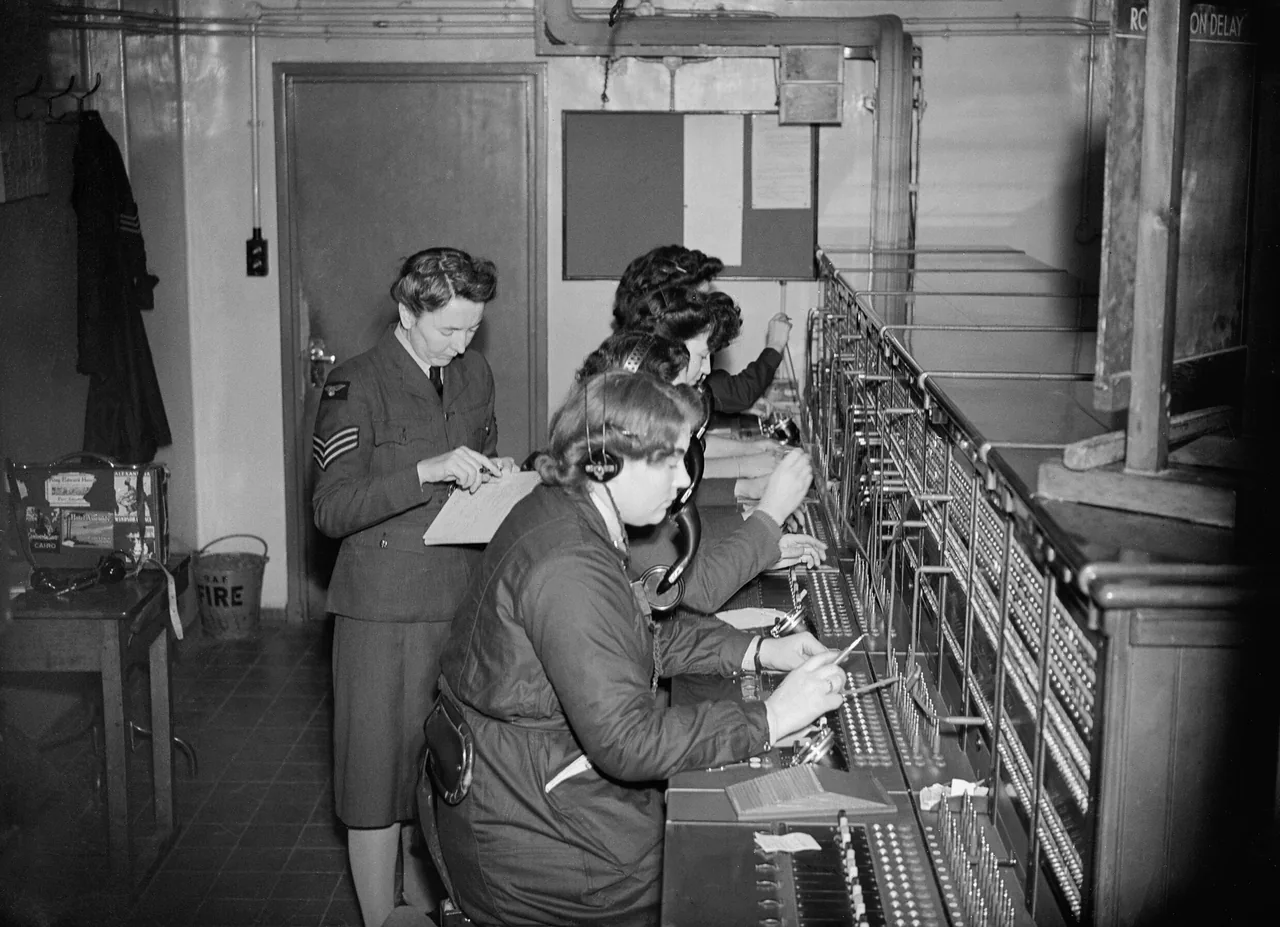
Britain's old telephone network is disappearing. But in a world increasingly dependent on electricity and internet connections, how do we communicate when neither is available?
Part of The Rebel Housewife's Be Ready series
There's something rather comforting about an old-fashioned telephone, isn't there?
Those chunky handsets with their curly cords. The familiar sound of a dial tone. The telephone table in the hallway, complete with a little notebook full of numbers and possibly a pen that hadn't worked since 1997.
I'm not suggesting we all return to the days of waiting for someone to get off the phone so we could use the internet. But there was something wonderfully straightforward about picking up a receiver and making a call.
And now, another piece of everyday British life is quietly disappearing.
BT plans to retire the old landline network used by Openreach services by 31 January 2027. Your provider should explain whether you will move to a digital landline or another suitable phone service. Openreach explains the switch.
For most households, the change will be relatively straightforward.
But there's one rather important question that deserves more attention.
What happens if there's a power cut?
And what if our internet goes down at the same time?
Because if we're going to talk about being prepared for emergencies, we really ought to talk about how we're supposed to communicate during one.
First, what exactly is being switched off?
The traditional telephone network being retired is called the Public Switched Telephone Network, or PSTN.
It's the old system that has carried telephone calls across the country for generations.
Openreach says the network is ageing, increasingly difficult to maintain and no longer suitable for modern communications.
The replacement is digital telephone technology, often called Digital Voice or VoIP (Voice over Internet Protocol).
Instead of your telephone connecting directly to the old phone network through a wall socket, it will generally connect through your broadband router.
You can keep your telephone number, and you may be able to keep your existing handset. Your provider should explain whether you need an adaptor, router or new phone. You can ask about a phone-only option if you do not want an internet package.
So far, so sensible.
And to be clear, this doesn't mean every copper cable in Britain is being physically ripped out overnight. It's the old analogue telephone service that's being retired. Some broadband connections will continue to use copper wiring.
There's also an important distinction: the January 2027 deadline applies to Openreach's traditional network. Other operators have their own migration plans.
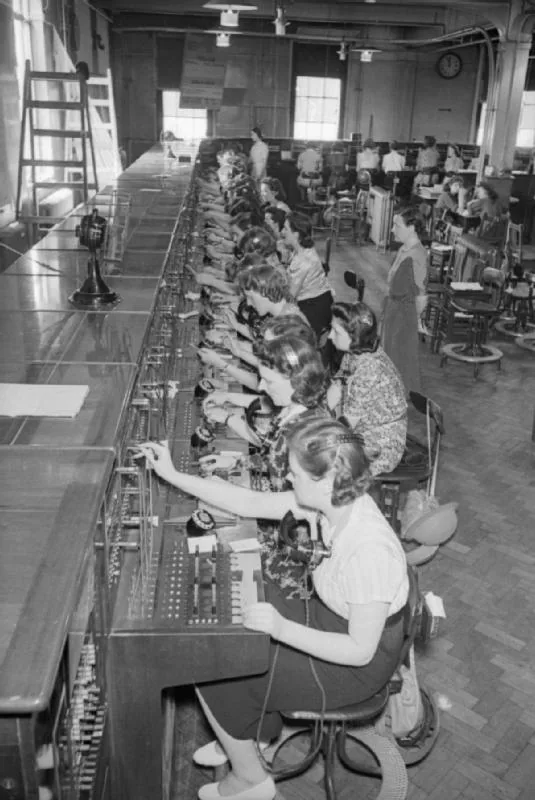
But didn't old landlines work during power cuts?
Often, yes. And this is where things get interesting.
Many traditional corded landline telephones could operate during a household power cut because they received the small amount of electricity they needed from the telephone exchange.
The telephone exchange had its own power arrangements.
That meant your house could be sitting in darkness, but you might still be able to pick up the telephone and call someone.
Not every old phone worked this way. Cordless handsets, for example, generally needed electricity for their base stations.
And even traditional lines could fail if the network itself was damaged.
Nevertheless, a simple corded telephone provided something rather useful: a way of communicating that didn't depend on your home's electricity supply.
Digital landlines are different.
Your broadband router needs electricity to work.
If the power goes off, your digital home telephone will generally stop working unless there's a suitable battery backup.
And suddenly, that old-fashioned telephone starts looking rather clever.
So what happens if the electricity goes off after the switch?
Let's imagine a perfectly ordinary British winter evening.
It's dark. It's raining. The wind is doing its usual impression of trying to remove the roof.
Then the electricity goes off.
The lights disappear.
The television stops.
Your broadband router switches off.
And your digital landline, unless it has backup power, stops working too.
Now, for many of us, the obvious answer is to use our mobile phones.
And in most situations, that's exactly what we'd do.
But what if the mobile signal is terrible where you live?
What if your phone battery is nearly flat?
Or what if the power cut affects local mobile infrastructure too?
This is why relying entirely on one method of communication isn't particularly sensible.
Can I still call 999 during a power cut?
Yes, provided you have access to a functioning telephone connection or mobile network.
A charged mobile phone is usually the simplest alternative to a digital landline during a household power cut.
There's also a useful feature many people don't know about.
If your normal mobile network has no signal, your phone may be able to connect to another available UK mobile network for a 999 emergency call.
However, this isn't a guarantee.
If no suitable mobile network is available, your phone cannot magically make a call.
And if the local mobile infrastructure loses power or suffers damage, services may become disrupted.
This is why a mobile phone is a very useful emergency tool, but not an infallible one.
What about people who depend on their landlines?
This is particularly important for older people, disabled people, people with medical conditions and households with unreliable mobile coverage.
Ofcom says that if you depend on your landline and don't have a working mobile phone or reliable mobile signal, your provider must offer a free solution that enables emergency calls during a power cut.
This could be a battery backup unit.
Ofcom says this backup must last at least one hour during a power cut. Read Ofcom’s power-cut and digital landline advice.
Some providers offer longer-lasting arrangements. This is support for emergency calling, rather than a promise that every phone feature, alarm or internet service will keep working.
But think about that for a moment.
One hour is useful during a short interruption.
It isn't necessarily much help during a prolonged outage lasting overnight or several days.
That's why it's worth asking your provider exactly what their backup equipment does, how long it lasts and what happens when its battery runs out.
Anyone using a telecare alarm, health pendant or another device connected to their telephone line should also contact both their telephone provider and the equipment supplier before switching.
These devices may need checking, replacing or adapting. Tell both providers before the change; Ofcom says the switch can be paused where needed until a safe solution is in place.
And nobody should assume that an existing alarm will automatically continue working just because their telephone number stays the same.
What if we lose both electricity and internet for 72 hours?
This is the question I think every household should consider.
Not because we're expecting some enormous national disaster, but because storms, flooding, infrastructure faults and prolonged power cuts can and do happen.
Let's imagine we're without mains electricity and home broadband for three days.
How would we contact family?
How would we know what's happening locally?
How would we receive official updates?
And how would we call for help if somebody needed it?
The good news is that there are several practical steps we can take without turning our homes into underground survival bunkers.

1. Keep a charged power bank
A portable power bank is probably one of the simplest and most useful additions to an emergency drawer.
It allows you to recharge your mobile phone without using a wall socket.
Look for a reputable model with sufficient capacity for your needs, and keep its charging cable with it.
Check its charge regularly.
Remember that a power bank keeps your phone running. It cannot restore a failed mobile network.
2. Have a battery-powered or wind-up radio
I’ve already talked about my love of old-fashioned radios and the wireless in our Be Ready series.
And this is precisely why they're still useful.
A radio capable of receiving broadcasts independently of your home broadband can provide news, weather warnings and official information when your Wi-Fi isn't working.
BBC local radio can be particularly useful during emergencies.
A battery-powered radio is a sensible choice, provided you keep spare batteries.
A wind-up radio can be another option, although its actual performance and charging requirements vary between models. The government’s Be Ready checklist recommends a battery-powered or wind-up FM radio. Test yours now and write down the frequencies of stations you can receive for news. A radio needs a working broadcast signal, too; an internet-only radio will not solve a broadband outage.
Important: An ordinary AM/FM radio is for receiving broadcasts, not contacting emergency services.
3. Write down important telephone numbers
Remember when we all knew telephone numbers off by heart?
Now I can barely remember what I walked into the kitchen for.
Our phones hold practically everything, including the contact details we might urgently need.
Write down essential numbers and keep them somewhere accessible.
Include relatives, trusted neighbours, your GP, relevant medical contacts and your electricity network operator.
For a power cut in England, Scotland or Wales, call 105. In Northern Ireland, call NIE Networks on 03457 643643. You still need a working phone connection to make either call.
4. Make a simple family communication plan
This doesn't need to be complicated.
Agree on a trusted contact outside your immediate area who family members can try to reach if local communications are disrupted.
Choose a safe, sensible meeting place if family members become separated and cannot contact each other.
If you have children, explain the plan in an age-appropriate way.
And if someone in your household relies on medical equipment, medication refrigeration, telecare or connected monitoring devices, make a separate plan for those needs with their care team or equipment provider.
Check the school’s emergency arrangements rather than inventing a collection plan that conflicts with them. Agree how trusted neighbours could check on anyone who might need help, when it is safe to do so.
5. Ask your telephone provider about battery backup
Don't wait until there's an actual power cut to find out what your digital landline can do.
Ask:
- Will my telephone work during a power cut?
- Do I qualify for a free backup solution?
- How long will the backup last?
- Does it power everything needed for emergency calls?
- What happens if the outage lasts longer?
- Will my existing alarm or care equipment continue working?
If you're vulnerable or rely on your landline, make sure your provider knows.
6. Find out whether you're on the Priority Services Register
In Britain, electricity network operators offer a free Priority Services Register for people who may need extra support during power cuts.
Eligibility can include disability, medical needs, older age, pregnancy, young children and other circumstances.
It can help eligible households receive additional communication and support during interruptions.
It doesn't guarantee an uninterrupted electricity supply, but it's worth investigating.
You may also need to register separately with other utility providers. In Northern Ireland, look for the relevant Customer Care Registers instead. The Be Ready guidance explains both.
Would walkie-talkies be useful?
Now we're getting into slightly more interesting territory.
Anyone who grew up watching 1980s adventure films will probably appreciate the appeal of a walkie-talkie.
And yes, UK-compliant licence-exempt PMR446 walkie-talkies can be useful for short-distance communication without mobile reception or internet access.
They're particularly handy if family members are nearby.
However, their actual range depends on buildings, terrain, interference and the equipment itself.
They aren't a replacement for a telephone.
And they cannot normally be used to contact 999.
Think of them as an additional way to communicate locally, rather than an emergency lifeline. Ofcom explains licence-exempt PMR446 equipment.
Could we keep the internet running with a battery?
Potentially, yes.
A suitable uninterruptible power supply, or UPS, can keep compatible broadband equipment running for a limited period during a power cut.
However, there are a few catches.
The battery needs enough capacity to power all the necessary equipment: potentially the router, a separate fibre connection box (ONT), and a powered telephone base. An ordinary USB phone power bank is not automatically compatible with these devices.
And the broadband network outside your home must still be functioning.
Keeping your router switched on doesn't guarantee an internet connection if the wider network is down.
Before buying anything, ask your provider about compatible equipment and the support available to your household.
What if every phone connection has failed?
If your digital landline is down and no usable mobile network is available, there is no ordinary phone setting that restores a connection. Wi-Fi calling also needs working Wi-Fi, broadband and power. A radio can help you hear information, but it cannot send a request for help.
That is where the plan on paper matters: who is nearby, who may need checking on, and where local help may be available. Follow local emergency-service instructions. If someone needs urgent help and calls cannot connect, seek help from a nearby person or staffed place if it is safe to do so; do not travel through floodwater or past damaged power lines to find a signal.
Is this something we should actually worry about?
I don't think we need to panic.
But I do think we need to ask sensible questions.
We're living in a world where an enormous amount of everyday life depends on electricity and internet connectivity.
Banking, shopping, communication, home security, healthcare services and even some household appliances rely on digital systems.
Much of that technology is genuinely brilliant.
But modern convenience can sometimes mean losing older systems that worked independently.
And perhaps that's the real lesson here.
Being prepared doesn't necessarily mean stockpiling supplies or spending hundreds of pounds on equipment.
Sometimes it means keeping a torch in the drawer.
A few spare batteries.
A radio.
A charged power bank.
And an actual piece of paper with telephone numbers written on it.
How wonderfully old-fashioned.
The Rebel Housewife's five-minute telephone check
Before you forget about the whole thing, here's a little job you can do today.
- ☐ Check whether your landline is already digital.
- ☐ Ask your provider whether it will work during a power cut.
- ☐ Tell them if your household needs extra support or has unreliable mobile coverage.
- ☐ Check any alarms or devices connected to your telephone line.
- ☐ Charge your power bank and find your phone cable.
- ☐ Write down a few essential contact numbers.
- ☐ Check whether your household qualifies for the Priority Services Register.
- ☐ Make sure everyone knows where your emergency radio and torch live.
No expensive shopping trip required.
Just a few sensible preparations.
A final thought
I rather love technology.
I love that we can communicate instantly with somebody on the other side of the world, find information in seconds and do things our grandparents could scarcely have imagined.
But I also think there's something worth preserving about the old ways.
Not necessarily the equipment itself, but the independence it sometimes gave us.
Because when the lights go out, the internet disappears and our carefully connected homes suddenly become rather disconnected, the simplest things can become the most useful.
A radio.
A notebook.
A charged phone.
A neighbour who knows you're there.
And perhaps that's what being ready is really about.
Not being frightened of what might happen.
Just making sure we've thought about it before it does.
Further reading and official guidance
- Openreach: The Big Switch Off
- Ofcom: Your landline is going digital
- UK Government: Be Ready
- Priority Services Register
- Be Ready: power-cut contacts and household planning
- NIE Networks: power-cut information
This article provides general UK household preparedness information. Follow your communications provider's advice about equipment and emergency access. For urgent emergencies, call 999 when a working connection is available.
The Rebel Housewife | Be Ready: Old-Fashioned Common Sense for Modern Emergencies
Like this? Share it with a friend or relative who still relies on their landline.
Our family’s 72-hour power-cut plan, including Type 1 diabetes preparation