Home & Family Preparedness
The UK Emergency Kit Advice: A Calm, Practical Guide for ADHD Mums
A working torch, familiar snacks and fewer decisions for future-you. Practical steps and a free checklist for busy family life.
Starting from absolutely nothing? Read our beginner’s guide to the first 72 hours for the basic water, food and family questions.
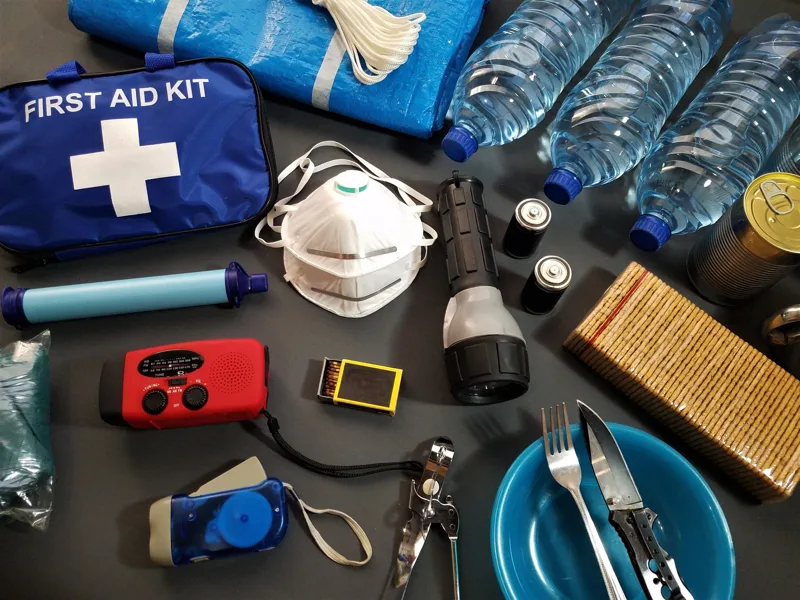
The government would like us to have an emergency kit. Meanwhile, I would quite like to remember why I walked into the kitchen.
If the recent headlines have made you wonder whether you should be buying bottled water, learning survival skills or simply having a little sit-down, let's take a breath. There is some useful advice here. We can work through it without turning the spare room into a bunker.
As an ADHD mum, I need instructions that tell me what to actually DO. Preferably in small chunks, with a list I can tick, and without an assumption that I have unlimited cupboard space or money. So here is the practical version.
What has the UK government actually announced?
On 22 October 2026, the Cabinet Office published updated household emergency advice through its Be Ready campaign. The central message is to prepare for three days of disruption, where possible, so help can reach people with the greatest needs. The campaign builds on government advice first published in May 2024. [1]
That might mean managing temporarily without power, running water or reliable communications. It is worth taking seriously. But the announcement itself does not identify a particular emergency as imminent.
Why are we hearing about it now?
The government points to recent storms and wildfires as examples of services being disrupted. My reading is that this advice deserves a place alongside checking the smoke alarm and knowing where the stopcock is: ordinary household planning for situations we would rather avoid. [1]
Think about an evening when the lights go out. Your phone is low, the children want dinner, and everything you planned to cook requires electricity. A few familiar supplies and a torch you can actually find would make that evening easier.
Three days is a planning target. It is not a prediction that every incident will last exactly 72 hours, or a promise that everything will be fixed by then.
Start with the cupboards, not the checkout
Before buying anything, look at what you already have. Blankets? A torch? Tinned fruit? A power bank hiding with fourteen mysterious charging cables?
Gather the useful things. Test them. Then write down the gaps.
The official advice encourages building supplies gradually. [2] If money is tight, start with free jobs: charge your power bank, write down important numbers and choose a place for your kit. One extra item on an affordable shopping trip is progress. An emergency kit should not become its own financial emergency.
Water: the number to write on the list
The current recommendation is three litres of drinking water per person per day for three days. That is nine litres each, with extra needed for cooking, washing and other household needs. [3]
| People at home | Drinking water for three days | Equivalent in 2-litre bottles |
|---|---|---|
| 1 | 9 litres | 5 bottles gives 10 litres |
| 2 | 18 litres | 9 bottles |
| 3 | 27 litres | 14 bottles gives 28 litres |
| 4 | 36 litres | 18 bottles |
| 5 | 45 litres | 23 bottles gives 46 litres |
Yes, for a family that is a fair amount of water. Work towards what you can safely store. Split bottles between suitable low shelves rather than balancing them on top of a wardrobe. Follow the storage instructions and check dates.
Allow separately for pets, infant feeding and medical needs. During an actual water incident, follow your water company's instructions; different problems can require different actions. [3]
Food: buy things your family will actually eat
The guidance recommends three days of shelf-stable food that needs neither cooking nor refrigeration. [2]
My addition: familiar food matters. An emergency is a poor moment to discover that your child would rather eat the cardboard packaging than the unfamiliar survival dinner.
Possible choices, depending on allergies and ages:
- Crackers, oatcakes and familiar cereal bars.
- Tinned fruit and ready-to-eat tinned vegetables or pulses.
- Tinned fish or meat, if your household eats them.
- Dried fruit and age-appropriate snacks.
- Small cartons of long-life milk, used according to the label once opened.
- Familiar spreads that can be stored without refrigeration, following their labels.
Check labels: being in a tin does not automatically mean something is ready to eat. Dry pasta is a cupboard staple, but it is not much help if you cannot safely boil water. Add a manual tin opener, plus whatever plates and cutlery you need.
Write down three simple no-cook day plans using your family's usual portions. This makes it easier to spot whether you have actual meals or just an impressive quantity of crackers.
For actual meal combinations and a shopping list, use our three-day no-cook family food plan. It starts with foods your household already accepts.
Light, warmth and information
Keep a working torch, spare batteries, warm layers and blankets accessible. A battery or wind-up FM radio can provide updates when other communications fail; a charged power bank can help keep a compatible phone running. Torches are safer than candles. [2]
My ADHD rule: put the torch in a place everyone knows. A brilliant torch in a mystery drawer is a scavenger hunt.
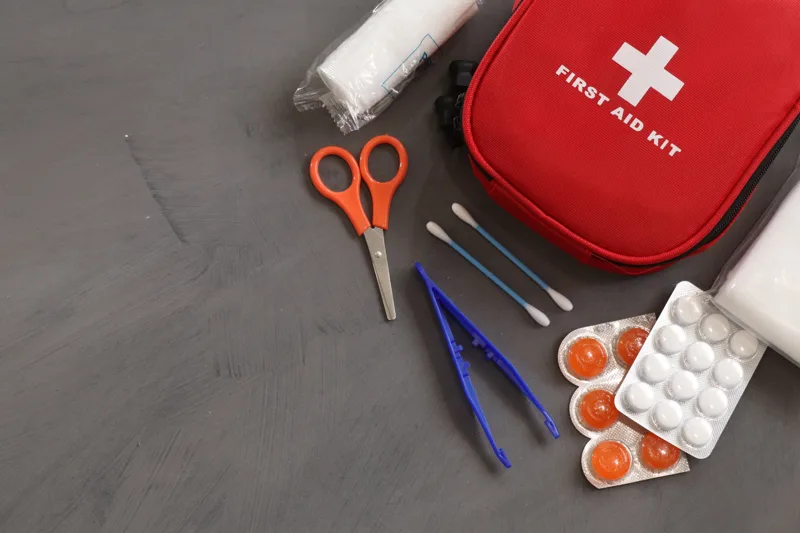
Medical needs belong near the top
Include essential medication and medical supplies, and keep a written list of medicines, doses and useful contacts. [2] Check repeat prescriptions early with your pharmacy rather than trying to accumulate medicines unnecessarily.
If your family relies on refrigerated medicines, powered equipment or diabetes technology, ask your care team for a specific outage plan. A power bank only helps if it is suitable for that device.
For a household managing Type 1 diabetes, make a separate list with the diabetes team covering insulin, delivery and monitoring supplies, hypo treatments and the prescribed backup plan. Follow the storage instructions for the particular insulin; keep it away from heat and never let it freeze. [4] A generic shopping checklist cannot replace that individual plan.
Store medicines safely away from children. On your main checklist, write where temperature-sensitive items live rather than putting them in a room-temperature box.
The free job worth checking: extra support
Check whether your household is eligible for the Priority Services Register, which helps utilities identify people needing additional support. In England, Scotland and Wales, start at thepsr.co.uk. Northern Ireland uses Customer Care Registers; follow the relevant links on the official Be Ready website. [2]
Registration is a useful part of planning, but it should not replace your own medical or household arrangements.
Make it work for an ADHD household
These are my practical additions to the government list:
- Choose one home for the kit. An existing box, bag or cupboard shelf will do. Label it clearly. Keep water nearby if it cannot fit.
- Keep a location list. Write where the blankets, medicines and documents are. They do not all need to live in the same box.
- Choose your next three jobs. Not thirty. “Find torch, charge power bank, write water target” is a perfectly useful start.
- Use reminders for maintenance. Add a six-month kit check, as the government suggests, and check batteries and charging more often according to the equipment instructions. [2]
- Rotate the food. Use items before they expire and replace them. Put the earliest dates at the front.
- Add comfort. Ear defenders, a favourite soft toy, a small game and familiar snacks can help make a disrupted routine more manageable. These are personal additions, not official kit requirements.
Give another adult a specific job if possible. Household readiness does not need to become one more invisible responsibility belonging entirely to Mum.
Have a tiny family plan
Write down who you would contact and where you would meet if you could not get home. Keep key information on paper as well as your phone. The official advice also suggests checking school contact details and thinking about essentials you could take if asked to leave. [2]
Keep a note of last-minute items such as medicines, glasses and keys. Explain the plan calmly to children: “Sometimes the power goes off, so this is where we keep the torch.”
If told to evacuate, follow emergency-service instructions. Do not stay behind to finish packing. Call 999 if someone is in immediate danger. [2]
Useful emergency-kit bits to compare
Use what you already own first. These are categories to compare, not products I have tested or government endorsements.
| Item | What I would look for |
|---|---|
| Battery torch or head torch | Simple controls; easy-to-find replacement batteries |
| Spare batteries | Correct sizes for your own equipment |
| Phone power bank | Reputable supplier; compatible cable and adequate capacity |
| Battery or wind-up FM radio | UK FM reception; straightforward tuning |
| Manual tin opener | Comfortable grip; test it with your usual tins |
| First-aid kit | Useful contents you know how to use; check expiry dates |
| Document wallet | Space for copies and written contacts; store securely |
| Storage box | Fits your space; an existing box is absolutely fine |
| Blanket or sleeping bag | Useful for your household; check what you own first |
I would buy bottled water and ordinary food wherever they offer the best value. This does not require a matching collection of survival gadgets.
Your five-minute starting point
Find the torch. Check whether it works. Put it somewhere sensible.
Then print the checklist and choose three things to do next. You can cross out anything that does not apply. No laminator required. Although obviously, if you've already got one...
The aim is to give future-you fewer decisions to make on a difficult day. A familiar snack, a working light and a plan written down can be a very good beginning.
Sources and further reading
This is an independent Rebel Housewife guide; the ADHD organisation tips are editorial suggestions. Follow current official and local instructions during an incident.