From frightening turnips to American pumpkins, soul cakes to trick-or-treat bags: Halloween has been crossing the Atlantic for a very long time.
Every October, a pumpkin appears outside half the houses on the street. It might have a wonky grin, an elaborate haunted-house scene, or the expression of somebody who has just checked the price of a family trip to a pumpkin patch. But why a pumpkin? And why do children knock on doors asking for sweets?
The short version: the glowing face has older roots in Ireland, Scotland and elsewhere in the British Isles, but the pumpkin version took hold in North America. Trick-or-treating has relatives in British and Irish customs, though the modern doorstep routine was assembled and popularised across the Atlantic. The story has travelled in both directions.
First, Halloween wasn't originally about pumpkins
The name comes from All Hallows' Eve, the evening before the Christian feast of All Saints on 1 November. All Souls' Day follows on 2 November, traditionally a time to remember and pray for the dead. In medieval England, poorer people could go souling around this period: calling at better-off neighbours' doors for small oat-based soul cakes, with prayers for the neighbours' dead in return. It was food, faith and community obligation all wrapped up in one visit. English Heritage's history of soul cakes explains the practice and its religious context.
There is another strand, too. The Gaelic festival of Samhain marked a turn towards winter and is part of Halloween's wider cultural history. But it is too tidy to say that every Halloween custom is a direct survival of one ancient Celtic ritual. Customs changed over centuries, and Christian observances, local folklore and later inventions all contributed. The British Museum describes the connection to Samhain with that historical caution.
The first lantern was a much angrier vegetable
Before pumpkins took over, people carved faces into turnips and other root vegetables. In Scotland, the neep or tumshie lantern could be hollowed out, lit and made to look genuinely alarming. The National Trust for Scotland records them among traditional Halloween customs. I love a pumpkin, but a candlelit turnip looks as though it knows something terrible about you.
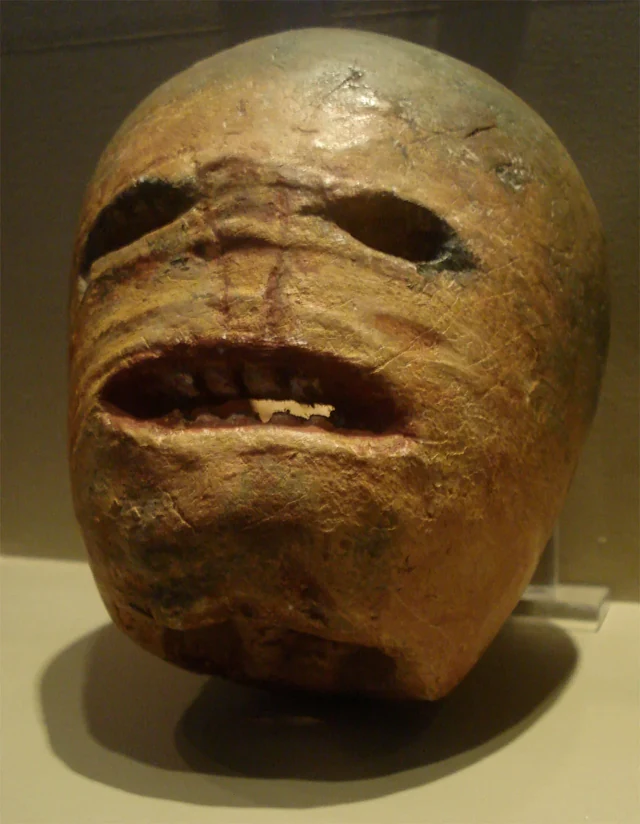

A folk tale about a trickster often called Stingy Jack offers one explanation for the name jack-o'-lantern: condemned to wander, he carries a glowing coal inside a hollowed-out turnip. That is a legend, not a documented account of the first person to carve one. Carved lanterns were also said to frighten away unwelcome spirits. English Heritage's account sets out the tale and the old doorstep practice.
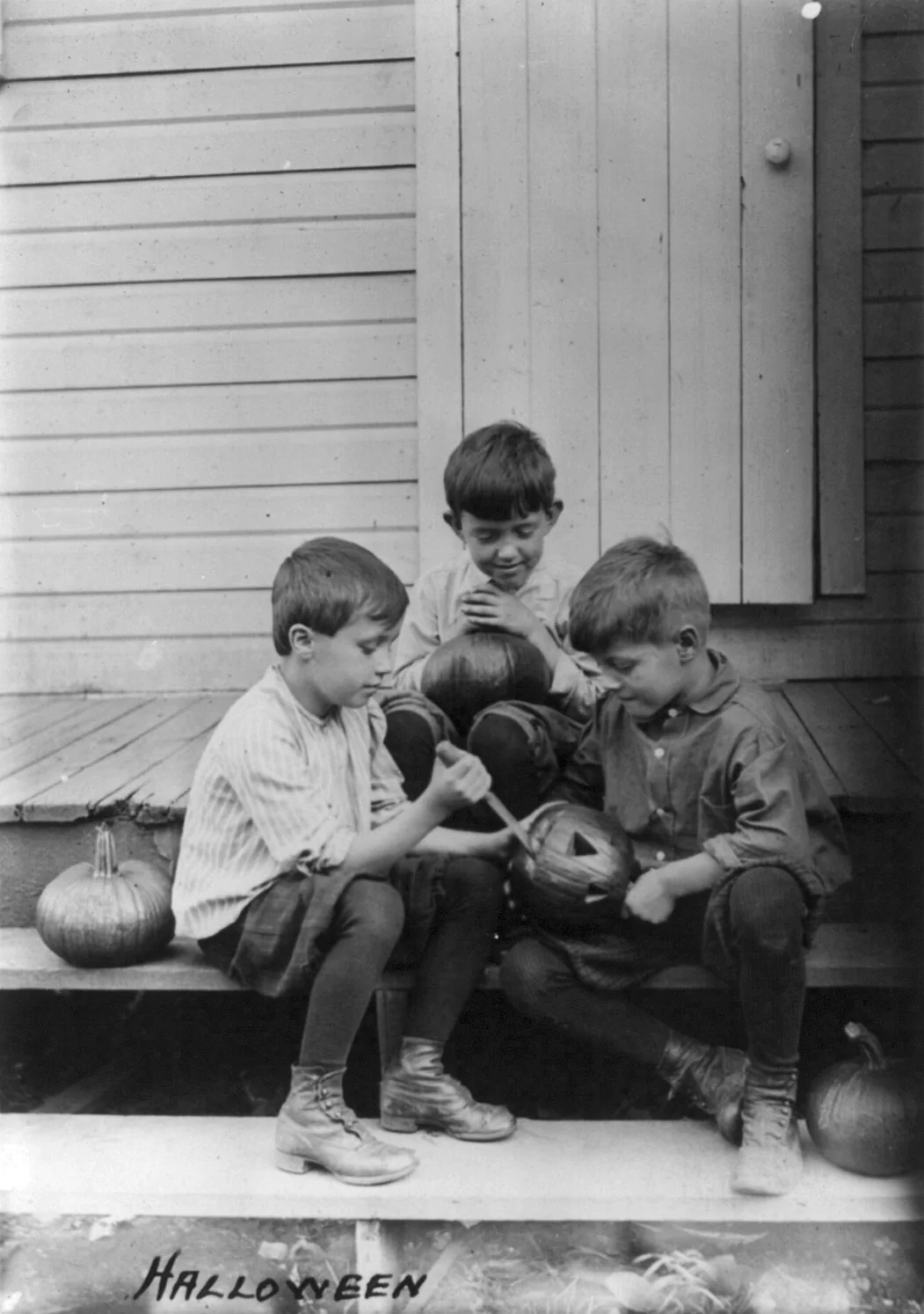
In the nineteenth century, migrants carried Halloween customs to North America. Pumpkins were already grown there; they were larger and much easier to scoop and carve than a stubborn turnip. The lantern acquired its familiar orange body. It was established as an American Halloween image well before modern supermarket Halloween: the Library of Congress discusses an 1867 engraving called The Pumpkin Effigy, and its collections include a 1917 photograph of boys carving pumpkins.
Did trick-or-treating start in Britain?
Its ancestors did. The version we know now did not simply sail over in one piece.
Souling was one kind of door-to-door exchange. In Scotland, guising was another: children in disguise went visiting and might sing, recite or perform a trick for a small gift. The National Trust for Scotland describes that tradition. Doorstep visiting, disguise, food and a little performance were all in the mix long before anybody said “trick or treat”.
Immigrants from Ireland and Scotland helped carry Halloween celebrations into North America. There, the customs mixed with other forms of masquerading, neighbourhood visiting and mischief. Historians do not agree on one single parent for modern trick-or-treating; the Library of Congress discusses several possible influences rather than a straight family tree.
By the early twentieth century, American Halloween could mean parties and pranks as much as sweets. Some historians suggest that organised treats helped channel the mischief into a more manageable neighbourhood ritual, but that is an interpretation rather than a proven single cause. The Smithsonian's National Museum of American History notes the vandalism reports and that theory. Door-to-door trick-or-treating spread in the 1920s and 1930s and became much more familiar in the post-war decades. The museum notes that it was not the central ritual of early twentieth-century American Halloween; home parties were. Its account of that earlier period is a useful corrective to the idea that every generation has always gone out with a sweet bucket.
Then the treats changed. Homemade food and small gifts shared space with manufactured sweets, while candy companies increasingly marketed to Halloween shoppers from the 1950s. The Smithsonian's history of Halloween candy traces that shift. What looks like an ancient sweet-collecting tradition is, in its familiar packaged form, comparatively recent.
The bit we can use instead of binning
Not sure how to cook one? Our pumpkin preparation guide explains the washing, cutting, peeling and purée-making from the beginning.
In Hubbub's 2023 UK polling and projections, 30.4 million pumpkins were expected to be bought for Halloween and 15.8 million were expected to be left uneaten. Those are 2023 estimates, not a count for this year, but the scale is hard to ignore. A lantern and a meal can come from the same pumpkin: scoop out the usable flesh before carving, wash it and cook it promptly. Don't use a lantern that has been sitting outside, collecting candle wax or starting to spoil. Hubbub also suggests decorating an intact pumpkin, then cooking it later.
If yours is an edible pumpkin, this simple pumpkin soup recipe uses 800 g of the flesh with one onion, stock and a little oil. No special spice blend, and no requirement to live like a person who makes all their own stock.
And now the pumpkin has come back across the sea
Here in Britain, we still have the older strands if we look for them: the church calendar, soul cakes, Scottish guising, carved roots, ghost stories and local variations. We also have the big orange pumpkin, costumes, shop displays and children asking for sweets. Some families celebrate the religious days; some carve something ridiculous and answer the door; some do neither. Halloween has never been frozen at one authentic moment.
So the pumpkin on your doorstep is a small piece of transatlantic history. A British and Irish lantern custom found a new vegetable in America, became an unmistakable Halloween image, and travelled back as part of the celebration we recognise today. If you fancy honouring the older version, try a turnip. Just allow considerably more time, and perhaps apologise to your wrists afterwards.
For another very British autumn ritual, read why we collect conkers, and whether they really keep spiders away.
