Weird & Wonderful · Everyday history
Why Do We Change the Clocks — and Is Time Even Real?
Farmers, sundials, railway timetables and a woman who carried the correct time in her handbag. A little clock-shaped rabbit hole.
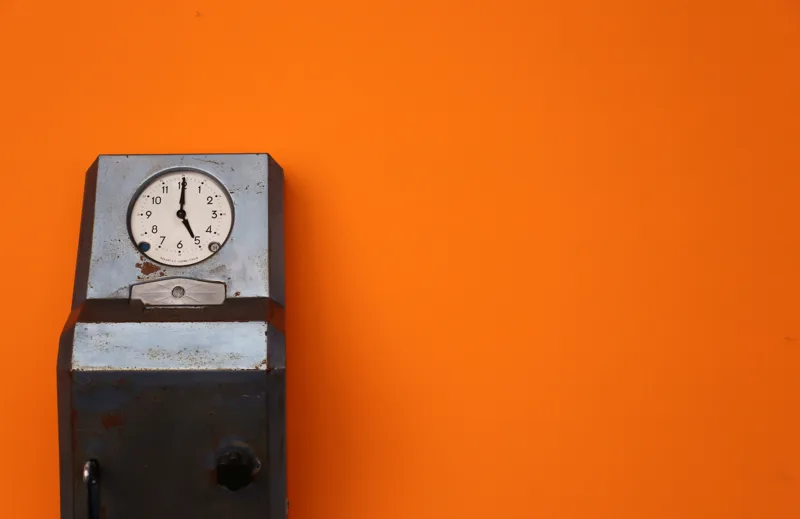
Twice a year, Britain collectively fiddles with time and then spends a fortnight saying, “It would actually be this time yesterday.”
The oven disagrees with the car. Your phone has quietly sorted itself out. The children have not read the memo about an extra hour in bed.
But why do we change the clocks? Was it something to do with farmers? How did anyone know when to turn up before watches existed? And if we can simply declare that two o'clock is now one o'clock, how seriously am I supposed to take time in the first place?
Put the kettle on. This gets rather interesting.
What are we actually changing?
Under the UK's current system, clocks move forward an hour on the last Sunday in March, beginning British Summer Time, and back an hour on the last Sunday in October, returning to Greenwich Mean Time. [1]
Moving forward shifts daylight into later clock hours. Moving back reverses that shift, giving lighter mornings than we would have if we stayed on summer time.
We haven't created or destroyed daylight. We have changed the numbers we attach to it. The autumn days would still be getting shorter without anybody touching the microwave.
It wasn't invented for the farmers
This is the explanation many of us grew up hearing, but it muddles the history.
British campaigner William Willett published The Waste of Daylight in 1907, arguing for better use of summer daylight and more evening leisure. Britain introduced summer time in May 1916, during the First World War, with fuel saving and productivity among the reasons. [2]
That is rather different from inventing an extra hour for harvesting.
Agriculture follows rhythms a clock cannot negotiate with: daylight, seasons, weather, crop conditions and animals needing care. Moving a hand around a dial does not dry a wet field or persuade a cow that breakfast has been rescheduled.
Farmers have not all taken the same view, either. Parliamentary evidence records agricultural objections to clock changes, alongside evidence that mechanisation and artificial lighting have reduced some effects. [2] “We do it for farmers” is much too tidy an explanation.
Before the clock ruled the kitchen
For centuries in rural England, sowing, haymaking and harvesting fitted into the agricultural year. Daily work was shaped by available light and the task in front of you. That did not make life leisurely: a harvest deadline imposed by the weather could be considerably less forgiving than an Outlook reminder.
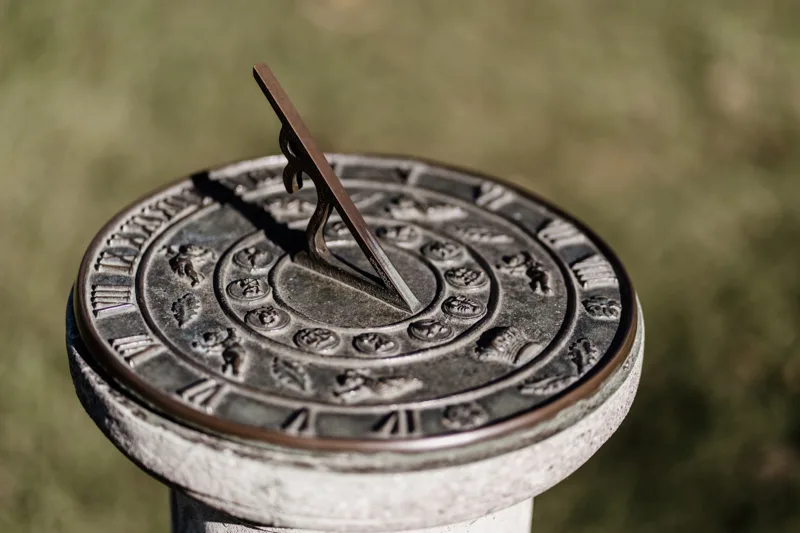
People also had ways to reckon time long before every household owned a clock. They watched the sun and shadows, used sundials and listened for communal signals such as church bells. Water clocks, marked candles and hourglasses offered ways to measure intervals, with different limitations. A sundial is less helpful under an English cloud. [3]
Mechanical clocks appeared in medieval Europe, initially in places such as churches and cathedrals. England's domestic lantern clocks became popular in the 1600s. [4] The household clock gradually became another voice telling people when to eat, pray, study and go to bed.
Very useful. Slightly bossy. An ancestor of the phone notification, perhaps.
England didn't always agree what time it was
Before national standardisation, places kept their own local time. Noon related to the sun's position, so towns east and west of one another could disagree by minutes without either being ridiculous.
Then the railways arrived. A collection of local times became awkward when you needed one usable timetable. Railway adoption of Greenwich time helped spread a shared standard; GMT became the legal time standard in Great Britain in 1880. [5]
Imagine missing your train because the next town had a different opinion about quarter past. I already have enough trouble with one time zone and a school bag.
A woman once carried the correct time in her handbag
Ruth Belville, known as the Greenwich Time Lady, checked a pocket chronometer against the Royal Observatory's standard and took the time to paying customers in London. They used her watch to correct their own clocks.
She ran her part of the family business from 1892 to 1940. [6]
An actual woman, with an actual handbag, delivering the correct time. I love this far more than I love being told my screen time has increased.
From pocket watches to vibrating crystals
The British Museum's clock and watch collection traces watches from the early 1500s onwards. Portable timekeeping brought the clock closer to the person, eventually making punctuality something you could carry around. [4]
A mechanical watch stores energy in a wound spring. An automatic watch is a mechanical watch that uses wrist movement to help wind that spring. A quartz watch uses an electrically driven quartz oscillator to keep time. “Analogue” describes a display with hands; it does not automatically mean mechanical. [7]
There is something rather lovely about a little machine quietly doing its job without also showing you seventeen emails.
So... is time just a concept?
Our timetables, time zones and decision to call a moment “half past three” are human arrangements. The passage of events and the time measured by clocks are questions for physics as well as philosophy.
Modern physics does not treat time as one universal clock ticking identically everywhere: motion and gravity affect how much time clocks measure. This matters in practical systems such as satellite navigation. [8]
Meanwhile, our experience of duration is its own everyday mystery. Five minutes waiting for a child to put shoes on can contain several geological eras. An hour doing something absorbing vanishes before the tea has cooled.
That comparison is a joke, not a physics lesson. But I do find it comforting that a clock's neat divisions are not the whole story of living through a day.
We can agree when to meet without letting every minute become a moral judgement about how much we achieved.
A few timekeeping things worth a look
If this has sent you down a clock-shaped rabbit hole, these would make useful browsing categories. Use what you own first; these are ideas rather than tested product recommendations.
| Find | What to look for |
|---|---|
| An everyday wristwatch | Readable face, comfortable strap and a movement you want to maintain |
| A retro kitchen or mantel clock | Clear numerals; check whether it ticks if sound bothers you |
| A simple visual timer | A clear display for short jobs, with an alarm you can tolerate |
| A garden sundial | A working instrument with positioning instructions, if you want more than an ornament |
| A book about clocks or the history of time | A pleasing excuse to keep following this particular rabbit hole |
For another small way to mark the season at home, try our 15-minute autumn reset. Or take your attention outside with a little autumn nature time.
The oven clock can wait until somebody remembers which two buttons to hold down.
Sources and further reading
- GOV.UK: when the clocks change.
- House of Lords: history and agricultural evidence on seasonal clock changes.
- University of Oxford: timekeeping devices; Aberystwyth University research: telling the time in medieval England.
- British Museum: clocks and watches; Museum of the Home: clock watching.
- Royal Museums Greenwich: the Observatory and railway time.
- Royal Museums Greenwich: Ruth Belville.
- Hamilton Watch: how mechanical, automatic and quartz movements work.
- National Physical Laboratory: the second; NIST: time, Einstein and precision timekeeping.