Ad · This article contains Amazon affiliate links. As an Amazon Associate I earn from qualifying purchases.
Because owning seventeen tiny ceramic animals is not the problem. The problem is allowing them to mill about the house without leadership, boundaries or a recognised address.
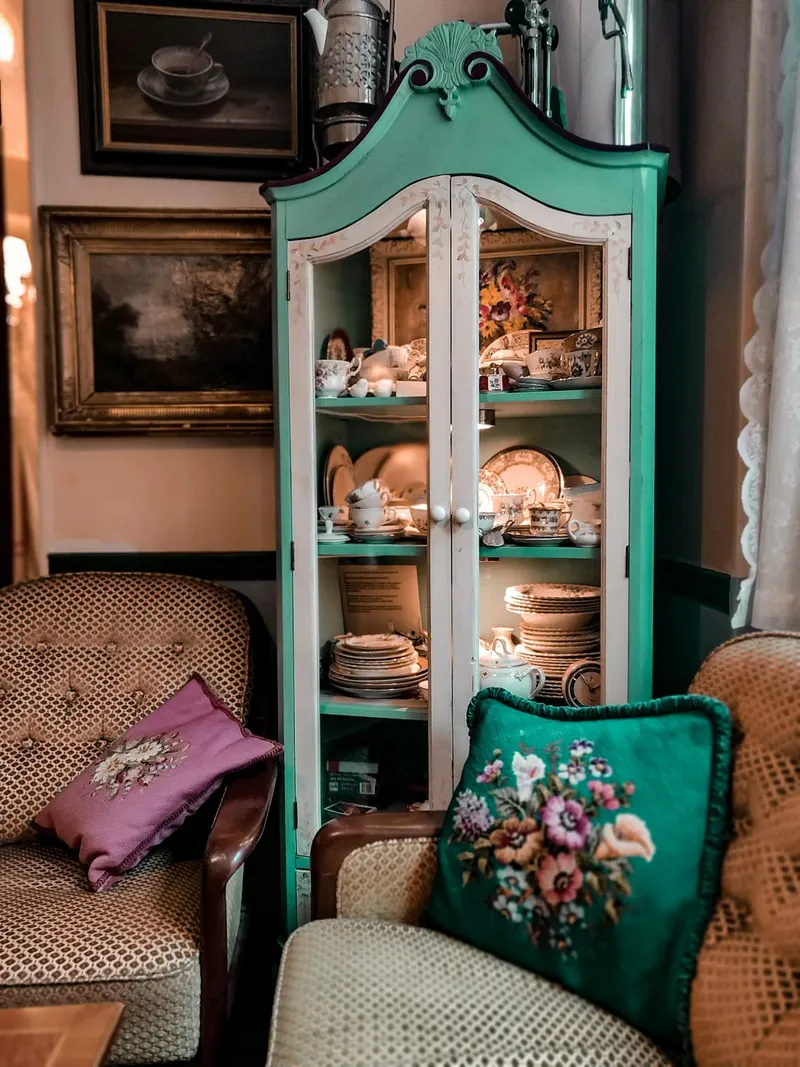
A glass cabinet gives a china collection its own little stage. Display inspiration, rather than a product photograph. Photo by Ioana Radescu on Unsplash.
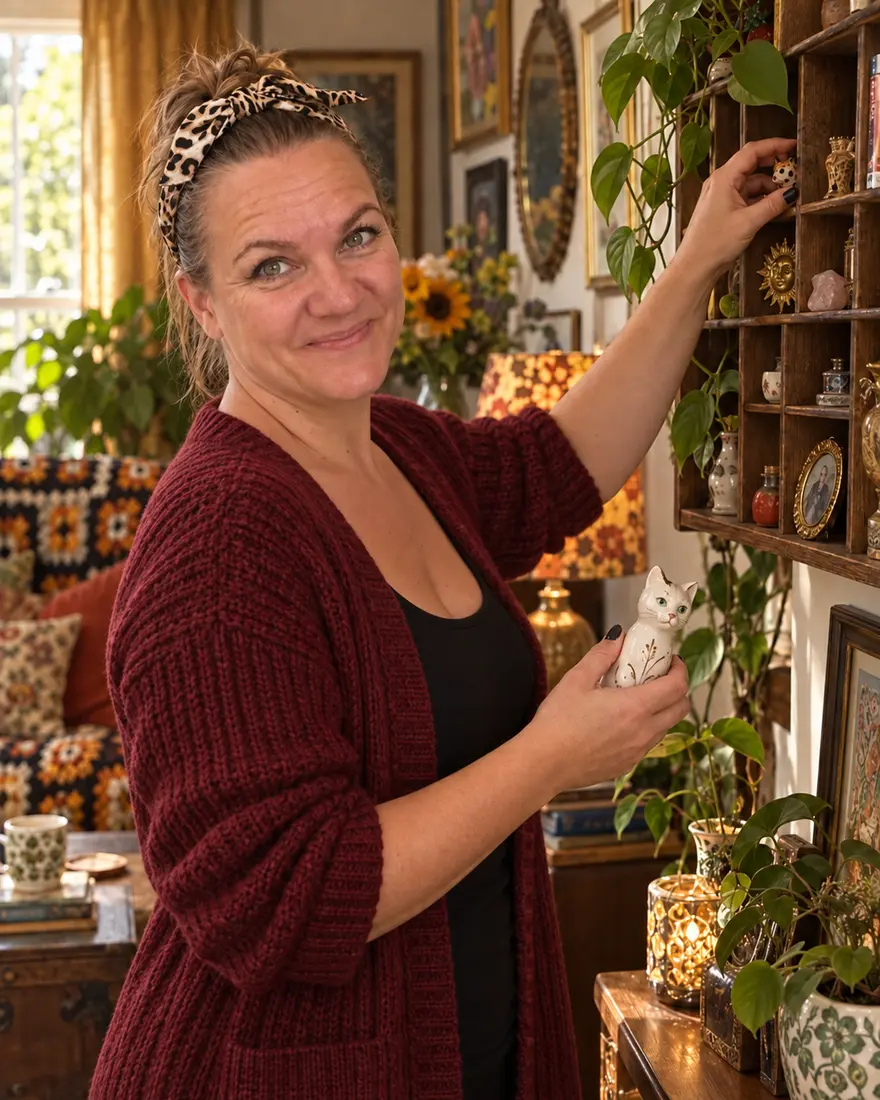
Give the odd things a proper homeA shelf, tray or tiny riser can turn “why is that there?” into a collection. The ceramic cat naturally assumes it is the curator.
The eight useful jobs
Contain it, lift it or give it a little stage
These are ideas for specific display jobs, not an instruction to order the entire page. I have not personally tested every item. Amazon listings, availability and specifications can change, so check the live description, measurements, materials and fitting instructions before ordering.
01
The tiny-object headquarters
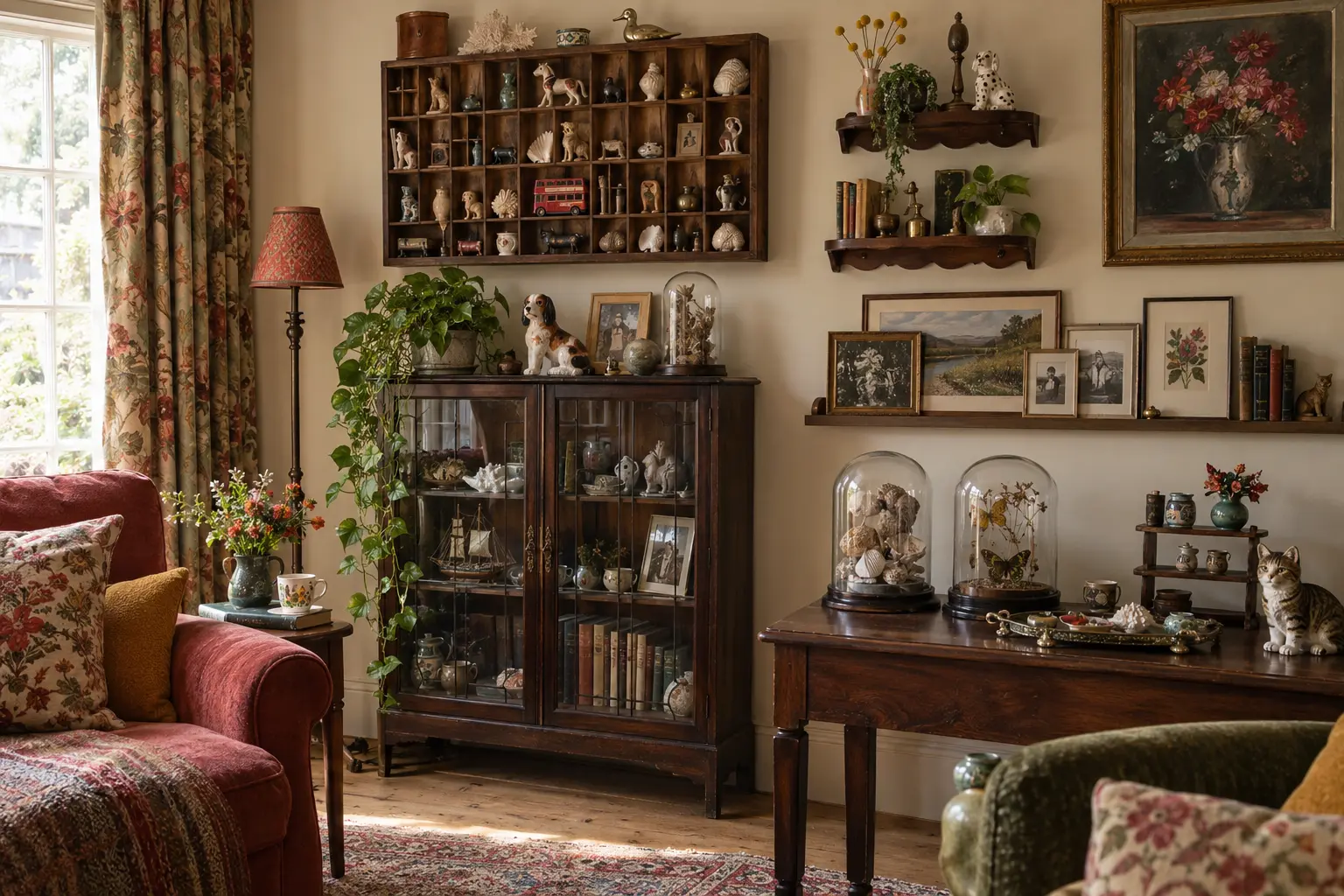
The principle, not an exact product photograph: give related things a boundary, vary the height and leave enough space to notice what you own.
A wooden compartment display shelf
Individual cubbies turn buttons, shells, miniature animals and inherited curios into a visible collection. It works best when you leave a few compartments empty and resist the urge to fill every square before the kettle has boiled.
Check first: the overall measurements, compartment sizes and mounting method. Your tallest ceramic goose may have opinions.
For the collection you love but do not wish to dust individually until the end of time. Glass doors keep the display visible while giving fragile pieces a little protection from ordinary family life.
Check first: external and internal dimensions, shelf capacity, assembly requirements and whether it must be secured to the wall.
The shaped edge adds character before anything has even been placed on top. Use one for a small group of three or five objects rather than attempting to balance your entire personality above a radiator.
Check first: shelf depth, included fixings and the recommended load for your wall type.
Layer frames, little books and lightweight objects, then change the arrangement without drilling a new hole for every picture. Particularly useful if your interests rotate seasonally or whenever Pinterest whispers a new idea at 11:47 p.m.
Check first: ledge length and depth, wall fixings and the weight of anything you plan to lean rather than hang.
Put one beloved object beneath glass and it immediately gains the authority of a museum exhibit. Ideal for dried flowers, shells, small sculptures or the inexplicable item your child found outside and formally gifted to the household.
Check first: the usable internal height and width—not merely the outer dimensions—and keep glass somewhere stable.
A tray makes several small things read as one arrangement. Use it for perfume, jewellery, matchboxes, miniature frames or the daily migration of objects that otherwise establish independent settlements across the dressing table.
Check first: the tray measurements and finish, particularly if it will sit on a surface that marks easily.
Raising the back row stops small objects disappearing behind one another and gives the eye somewhere to travel. It is the easiest way to make a collection look arranged without requiring everything to match.
Check first: tier width, depth and total footprint. Compare them with the objects and the shelf where it will live.
A small amount beneath a suitable ornament may help prevent light knocks becoming full-scale ceramic emergencies. It is the invisible practical item in a page otherwise dedicated to visible nonsense.
Check first: follow the listing instructions and test cautiously in a hidden area. Suitability can vary by object, finish and surface; avoid assuming “residue-free” means compatible with absolutely everything.
GatherA tray or compartment shelf for small wandering objects.
ProtectA cabinet or cloche for fragile and dust-prone favourites.
LiftA riser when the back row keeps disappearing.
RotateA picture ledge when you enjoy changing the display.
SecureGel only where the material and surface are suitable.
Affiliate disclosure: This page contains Amazon affiliate links. If you buy through one, I may earn a small commission at no extra cost to you. As an Amazon Associate I earn from qualifying purchases.
Pass it on
Know someone who'd like this?
Send them the article, or save it to your autumn board for later.